Case study
Niteshift
Niteshift runs coding agents like Claude Code and Codex in cloud sandboxes and returns a pull request with evidence it works.
- Role
- Sole designer, alongside full-stack engineers
- Scope
- Product UI, shared components and brand rollout
- When
- Feb 2026–present
- Shipped
- 256 merged PRs · 247 commits on main
01The product
Coding agents need a real environment to prove their work
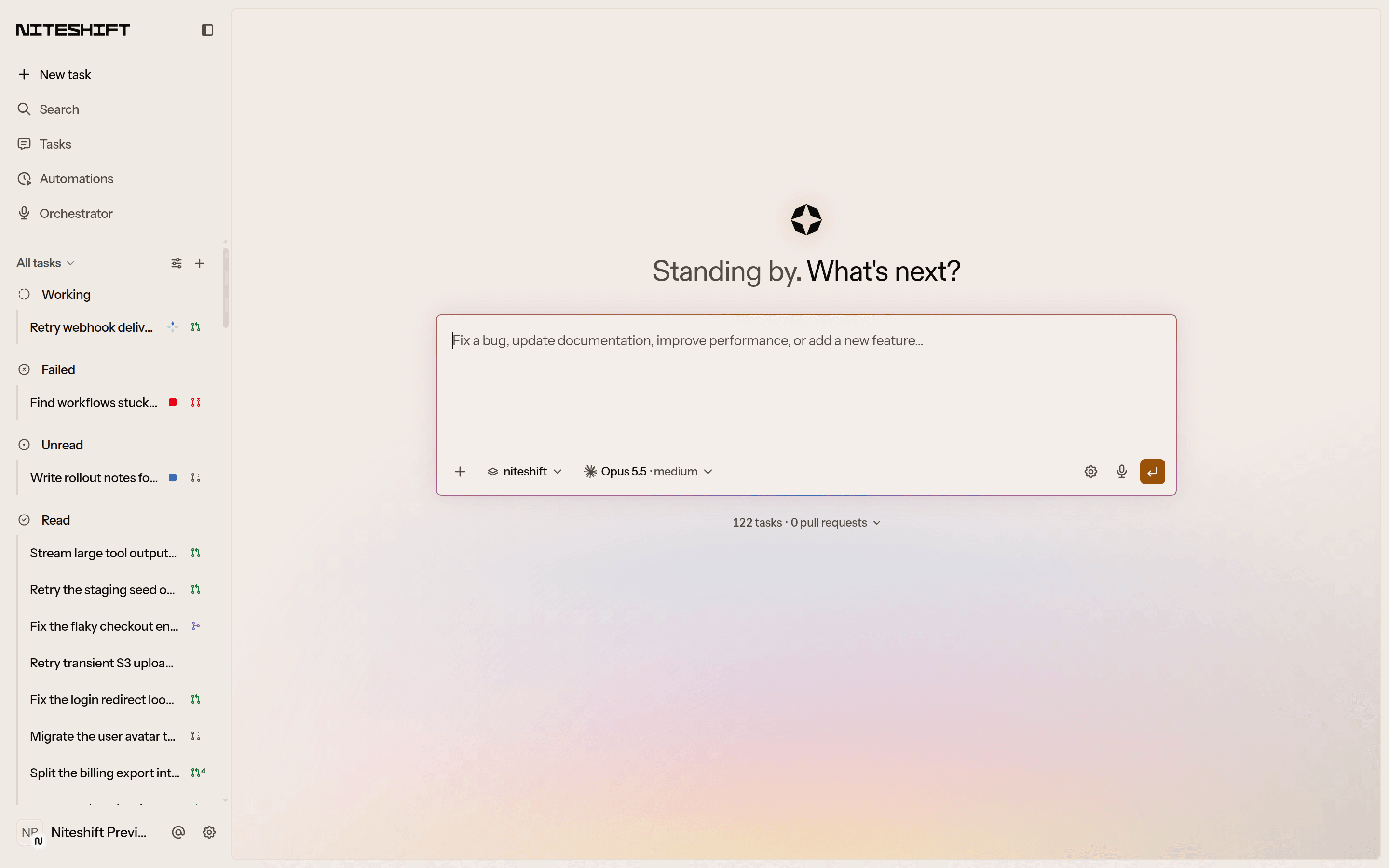
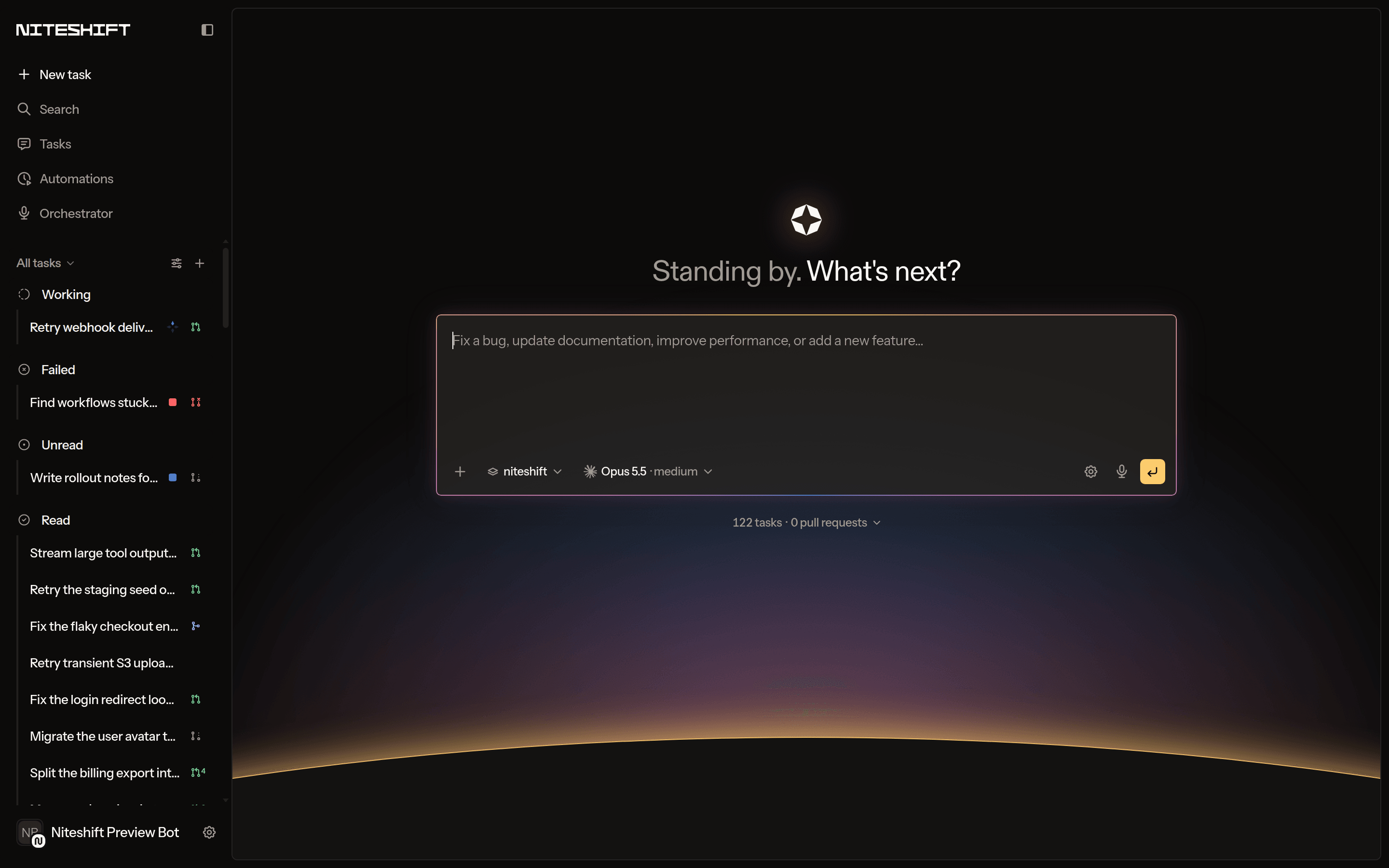
Niteshift is for developers and engineering teams who hand work to coding agents. Each task, started from the web app, Slack, Linear or GitHub, gets a cloud sandbox with the app running and a live preview, and comes back as a pull request.
Act I · The product
The surfaces where people direct their agents
02Task view
Help people find their place in a long agent run
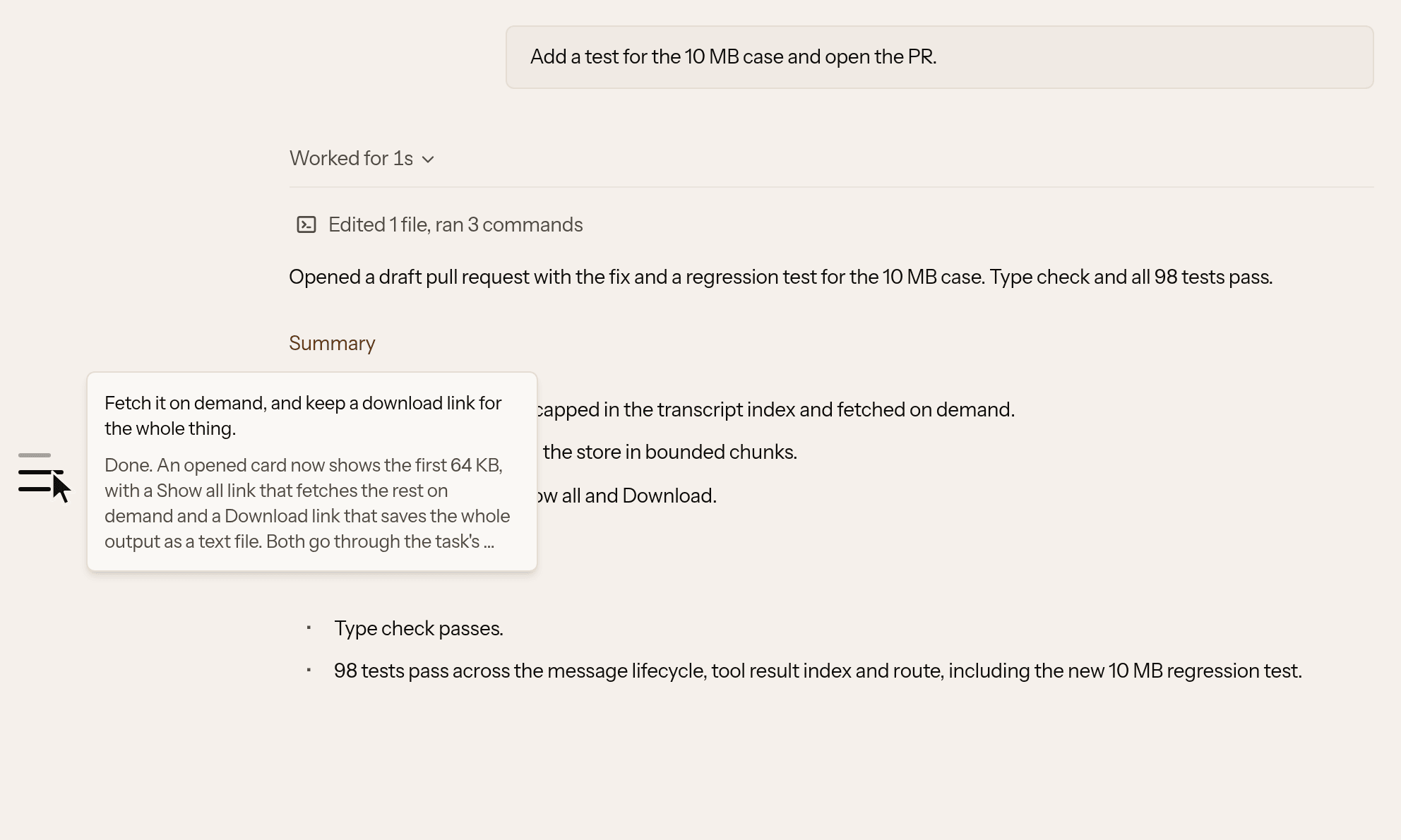
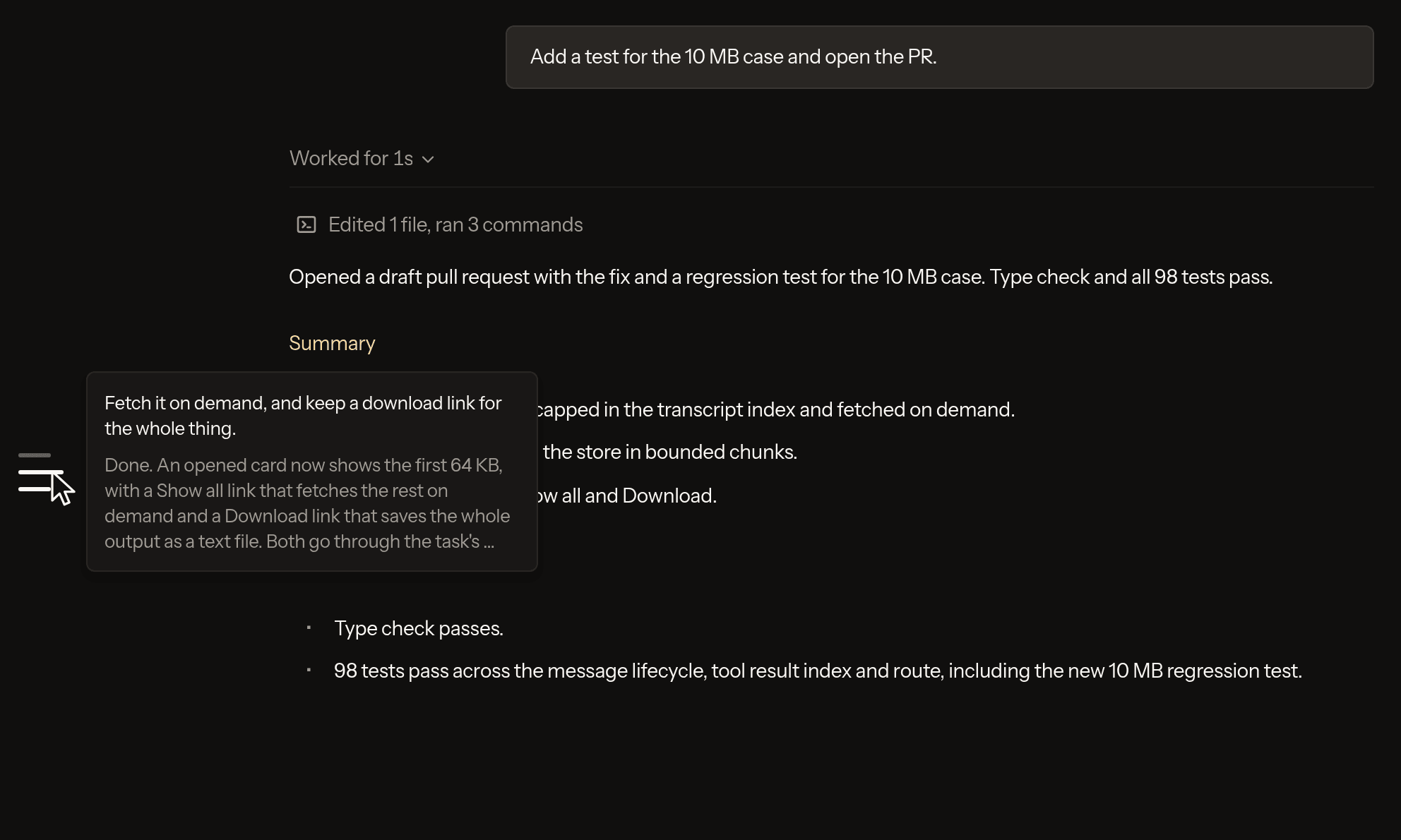
People spend most of their time in the task view, so its history has to stay compact without hiding the turn in progress. I added an outline of prompts with hover previews beside the transcript, and made finished activity collapse on its own.
03Automations
Build an automation as one flow, trigger first
Creating an automation meant a separate dialog for the trigger, and the page read as a stack of unrelated controls. I rebuilt it as one page: the name in the header, the trigger chosen first, and the schedule restated in plain words.
04Settings
Find a setting without knowing where it lives
People often couldn’t tell whether a setting like autofix was personal or organization-wide, so they couldn’t find it. I made settings searchable from the command palette, anywhere in the app, and showed each repository setting’s value without opening it.
Act II · The system
One shared library behind the product
05Design system
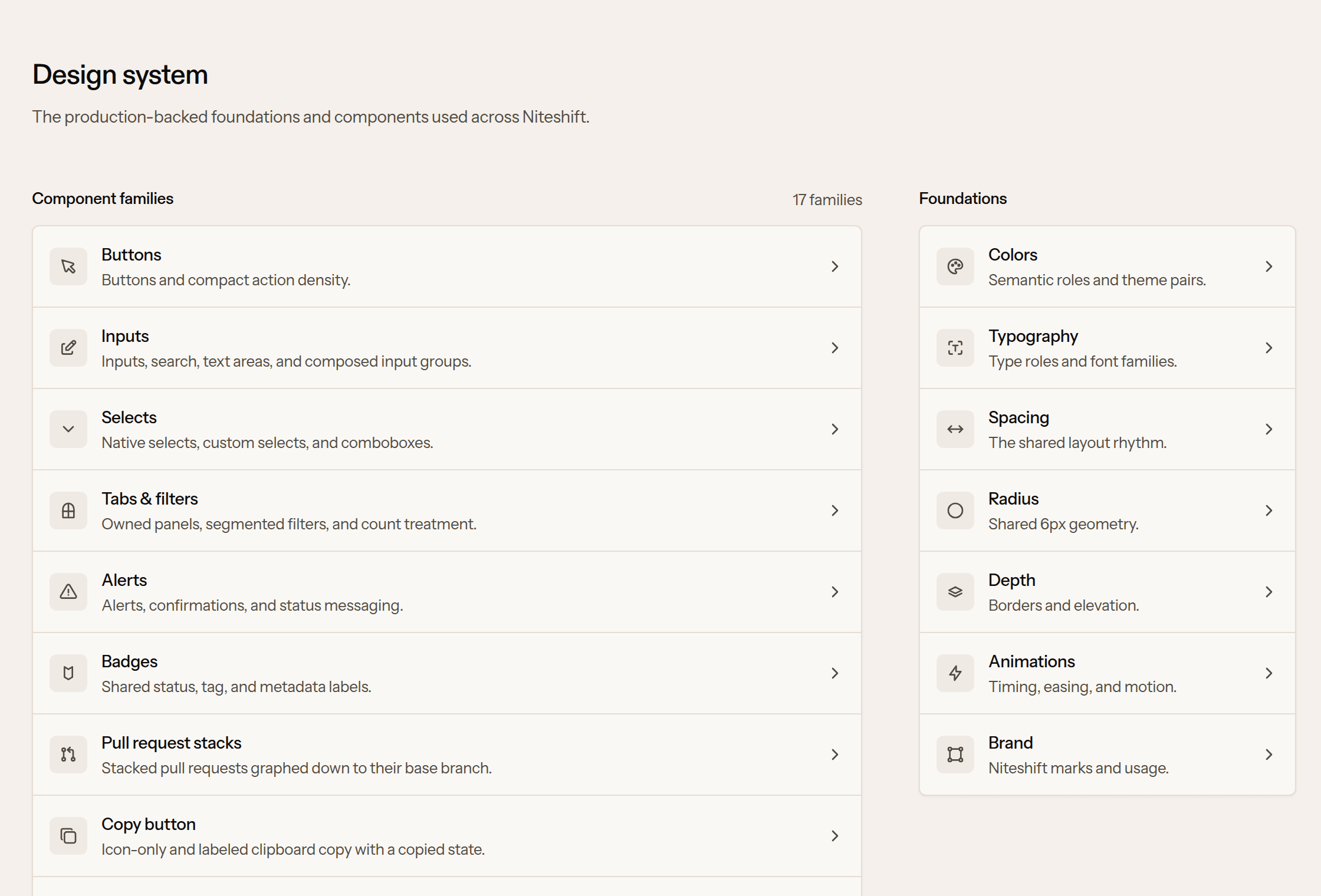
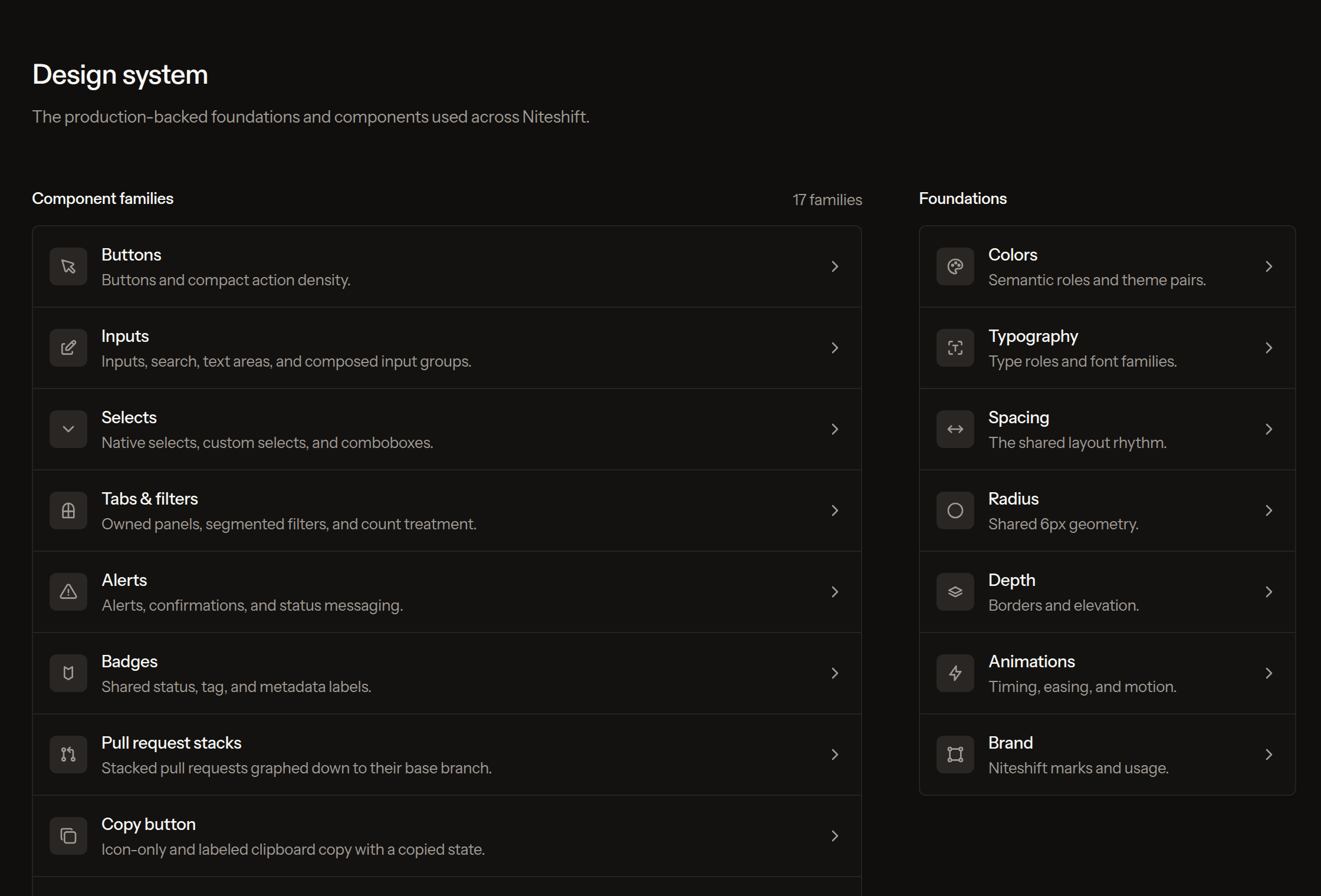
A design system that documents only what ships
The design system had drifted from the product, leaving people and agents with speculative components and outdated guidance. I co-built the ui-v2 library and its Nightglass tokens, then cut its showcase back to production-backed components, removing 12,474 lines.
Act III · A new brand
Bringing an agency’s brand into the product
06The starting point
Carry the agency’s identity into everyday use
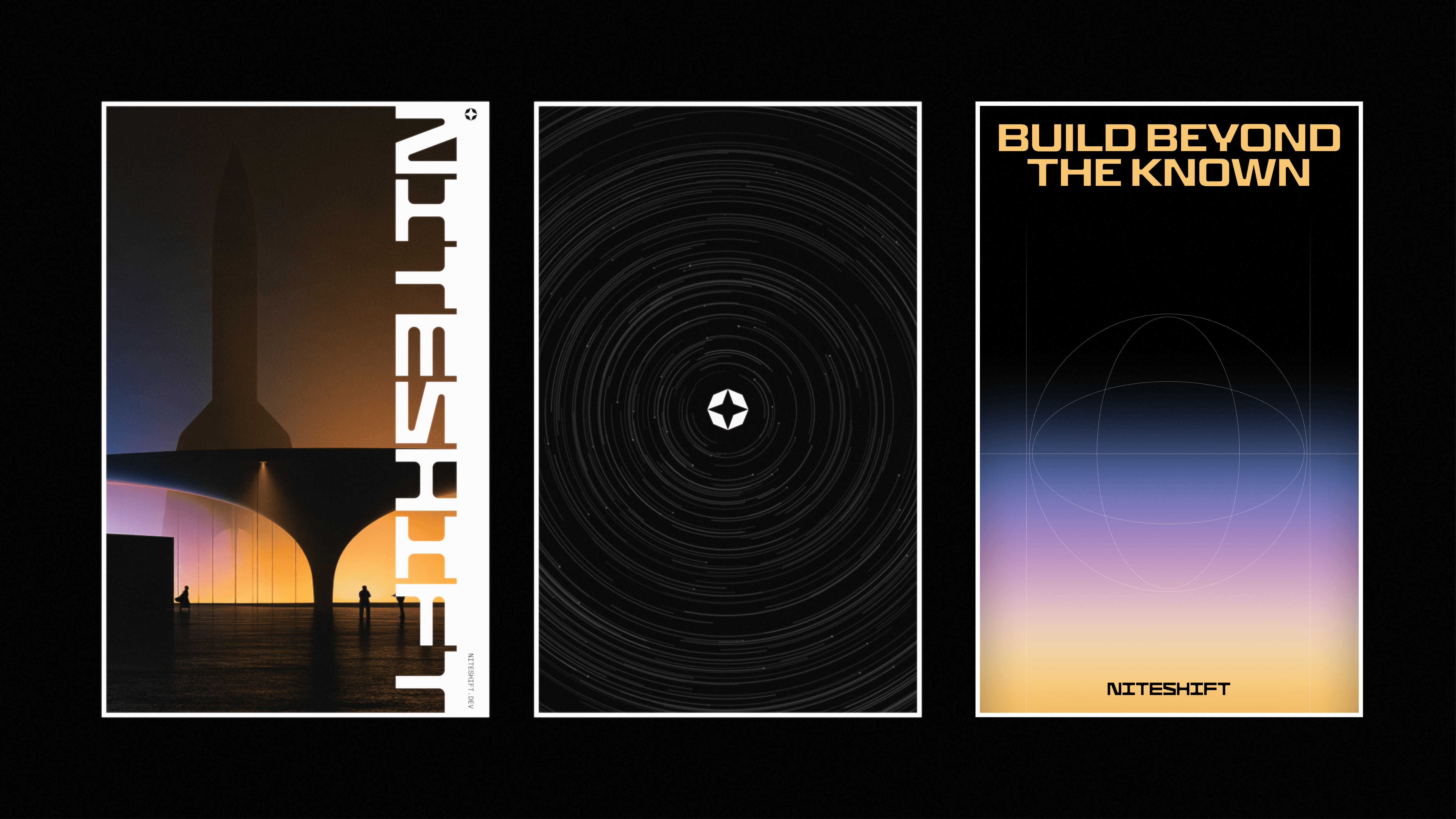
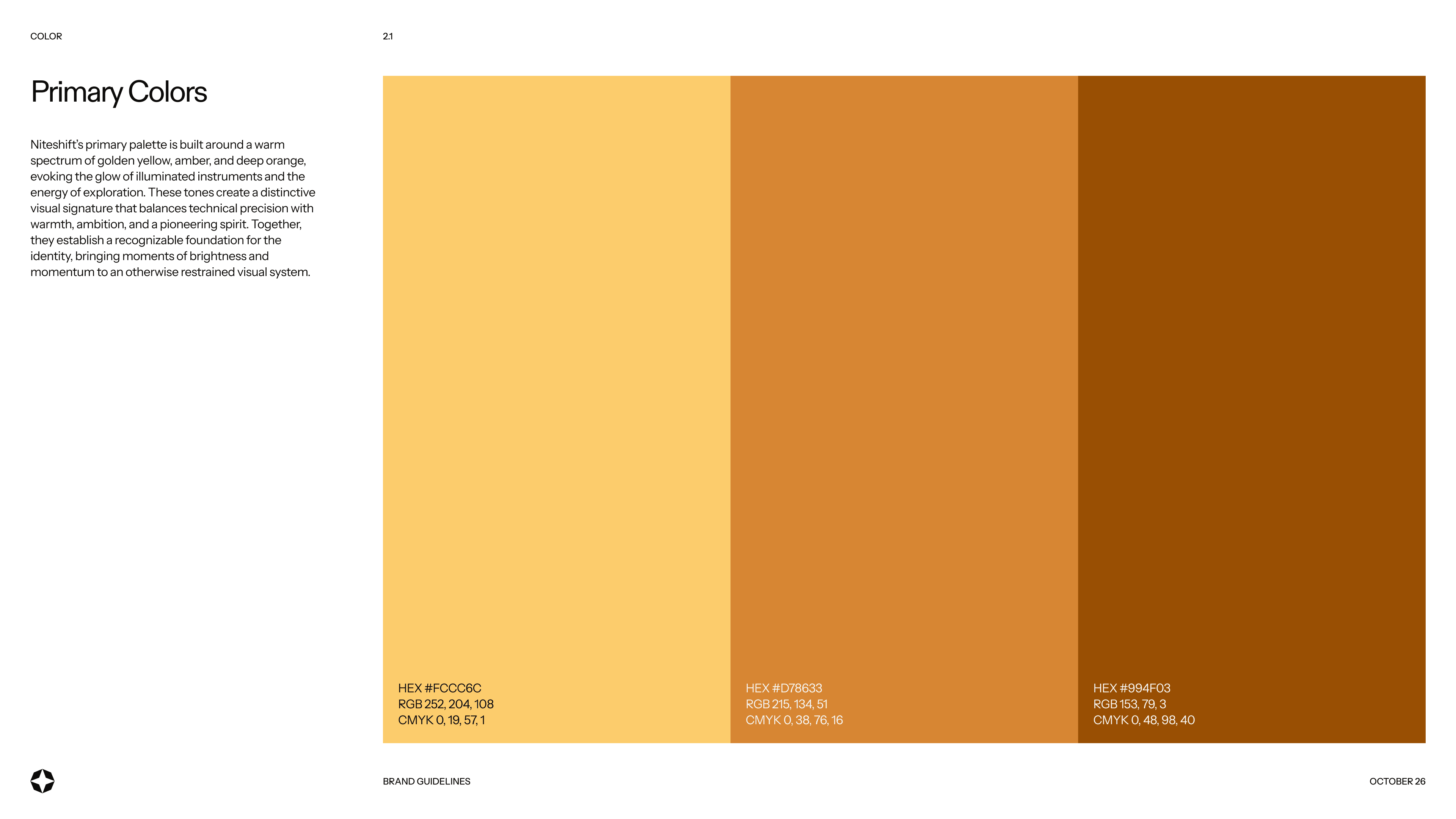
A brand agency defined Niteshift’s 2026 identity: the North Star mark, a warm palette and new typography. My role was to bring that direction into the web app’s components and screens, working with the engineers who build the product.
072026 brand
Live with the new brand before customers see it
The team wanted to live with the new identity in the product before customers saw it. I brought it into the app behind a flag, then made home just the headline and prompt box and quieted the sidebar and task view.