Case study
Cogent
A security product where agents find what matters, plan the fix, and ask before they act on your systems.
- Role
- Product design and front end
- Scope
- The whole product and its design system
- Shipped
- 933 merged PRs · ~5,800 commits
- Tested
- About 3,050 test cases
01The product
Security teams have more to fix than time to read.
Cogent’s agents do the reading: they connect to a team’s tools, find what matters and propose the fix, and a person stays in charge of every change.
Here is the whole product, each area sized by the pull requests that shaped it. The ✻ areas are the six screens this story walks through.
Foundations939
- Shared components397
- Design system318
- App shell112
- Browser tests112
Knowledge Base601
- Entities193
- Zero Day82
- Exposure78
- Assets62
- Findings52
- Security assessment41
- Vulnerabilities38
- Recommendations30
- Exploitability25
Agents414
- ✻ Agent Policies149
- ✻ Agent Chat99
- Agent setup and tuning78
- ✻ Automations53
- ✻ Investigations35
Remediation398
- ✻ Action Queue249
- Remediation plans65
- Risk exceptions60
- SLAs24
Admin158
- Settings and admin57
- Users and roles55
- Integrations46
Insights123
- ✻ Dashboard81
- Views and alerts42
Act I · Ask
A person asks; the agent answers and shows its work.
02Agent Chat
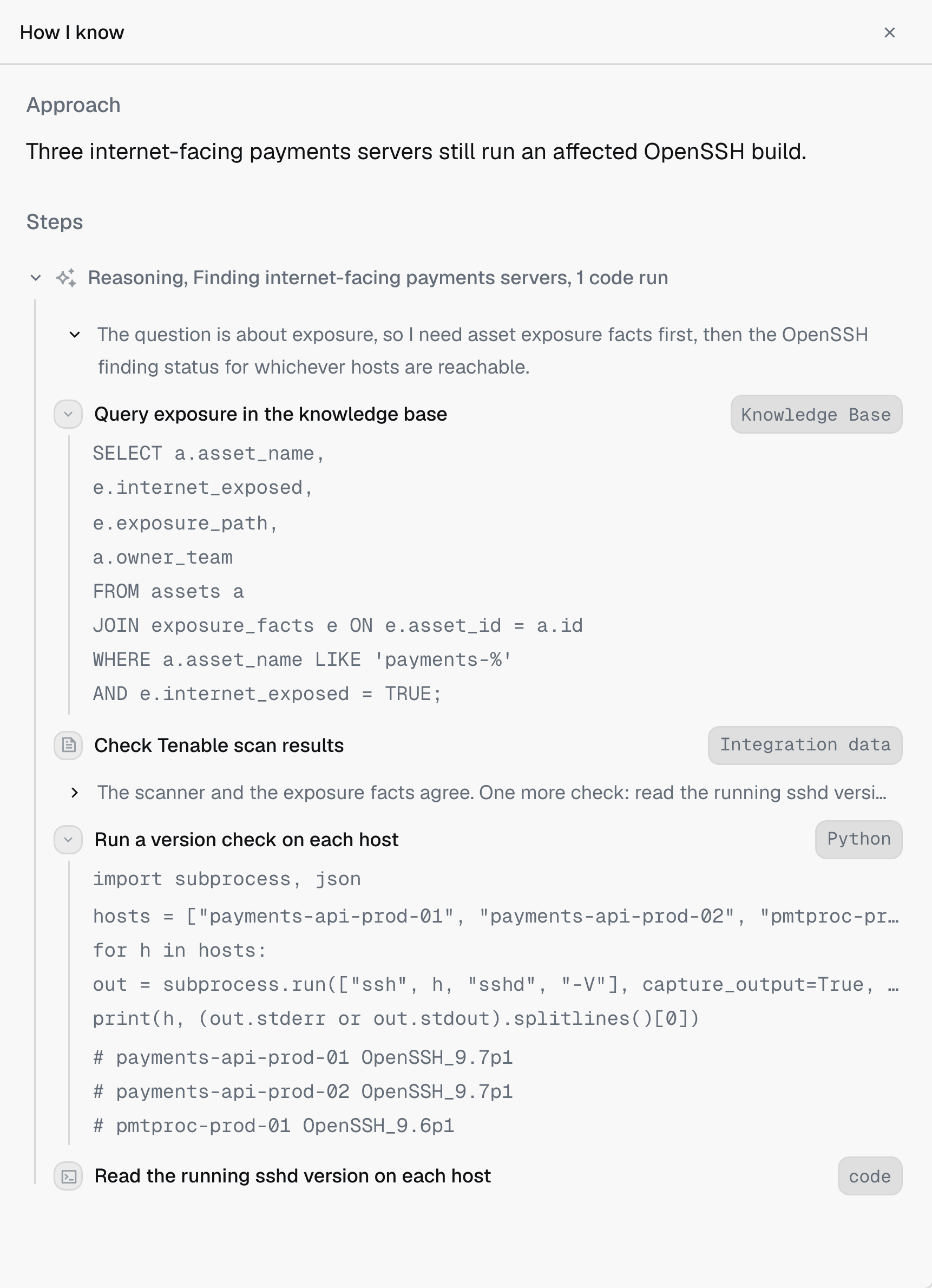
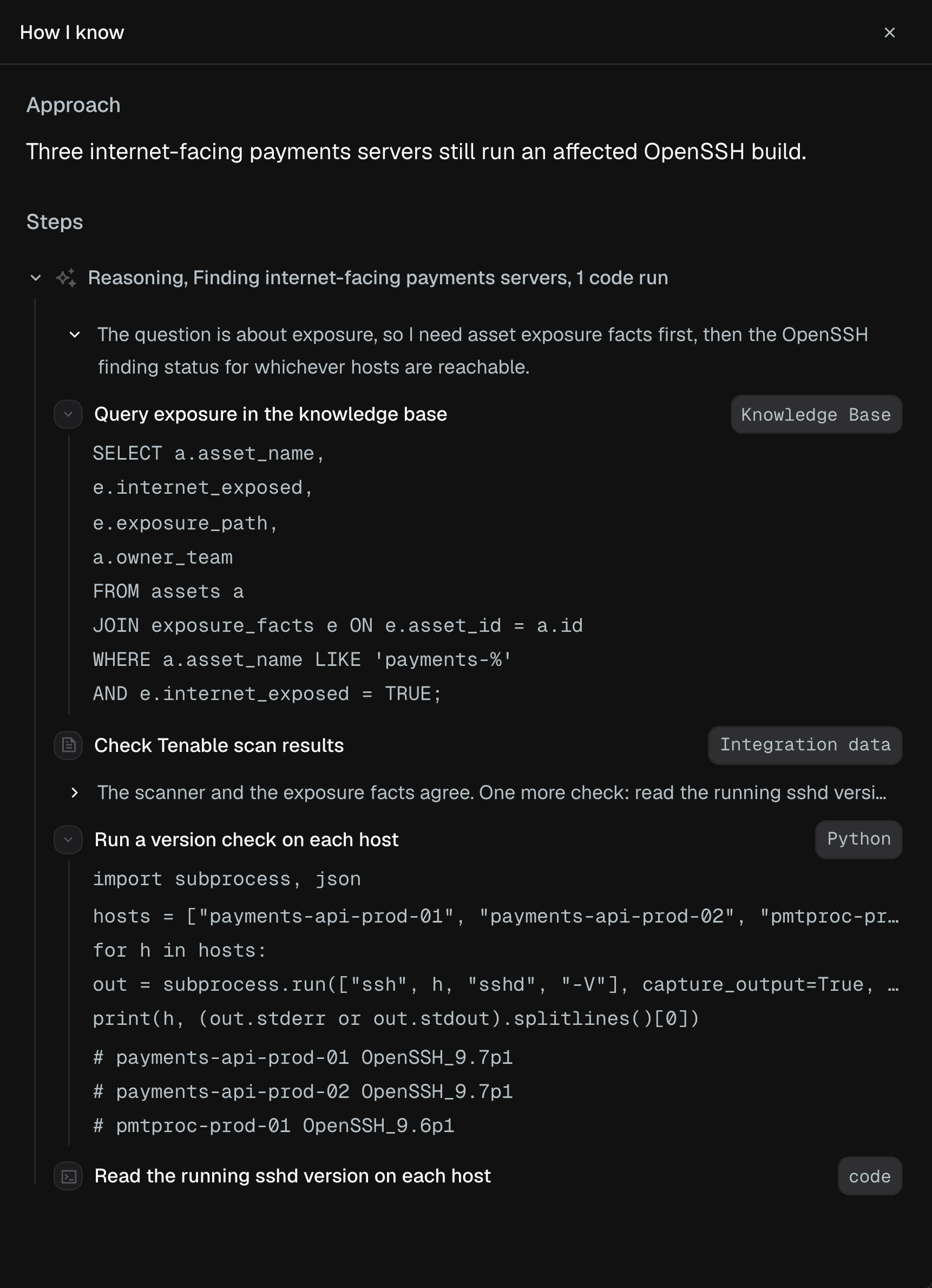
Answer first, then show the work.
Every answer leads with its conclusion. The queries, scripts and sources behind it open in How I know when you want them, and when the agent needs to change something, it stops and asks first.
Act II · Work
The agent brings the work; a person makes the call.
03Investigations
One investigation at a time.
Agents open their own investigations and deal them as a deck, highest rating first. Each card says what’s going on, what happens if nothing is done and how hard it is to undo. Hand it off or ask the agent, and the next card comes up.
04Action Queue
Then watch the fix land.
Every work item gets one status card: five stations, Cogent’s workspace saying what it’s doing right now, and the rollout rings underneath. A person starts each ring; Cogent runs it and checks it took.
Act III · Teach
Rules and routines, so the agent needs you less each week.
05Agent Policies
The agent drafts the rules; a person signs.
Four stages, from asset context to remediation. Cogent reads a team’s connected tools and drafts the rules it finds, each with its sources and what it would change. Nothing applies until a person adds it.
06Automations
A standing job, written as one sentence.
Automations read out loud: every weekday at nine, this agent does this and keeps the result here. Every underlined phrase is a picker, so there’s no form to learn.
Act IV · See
Where you stand, read the way a person asks.
07Dashboard
What needs you first, then the numbers.
People open a dashboard with a question in mind, so it’s one page, read in the order they ask: what needs me, where do we stand, is it working, and which team carries the most.
08Design system
Taste that scales with the team.
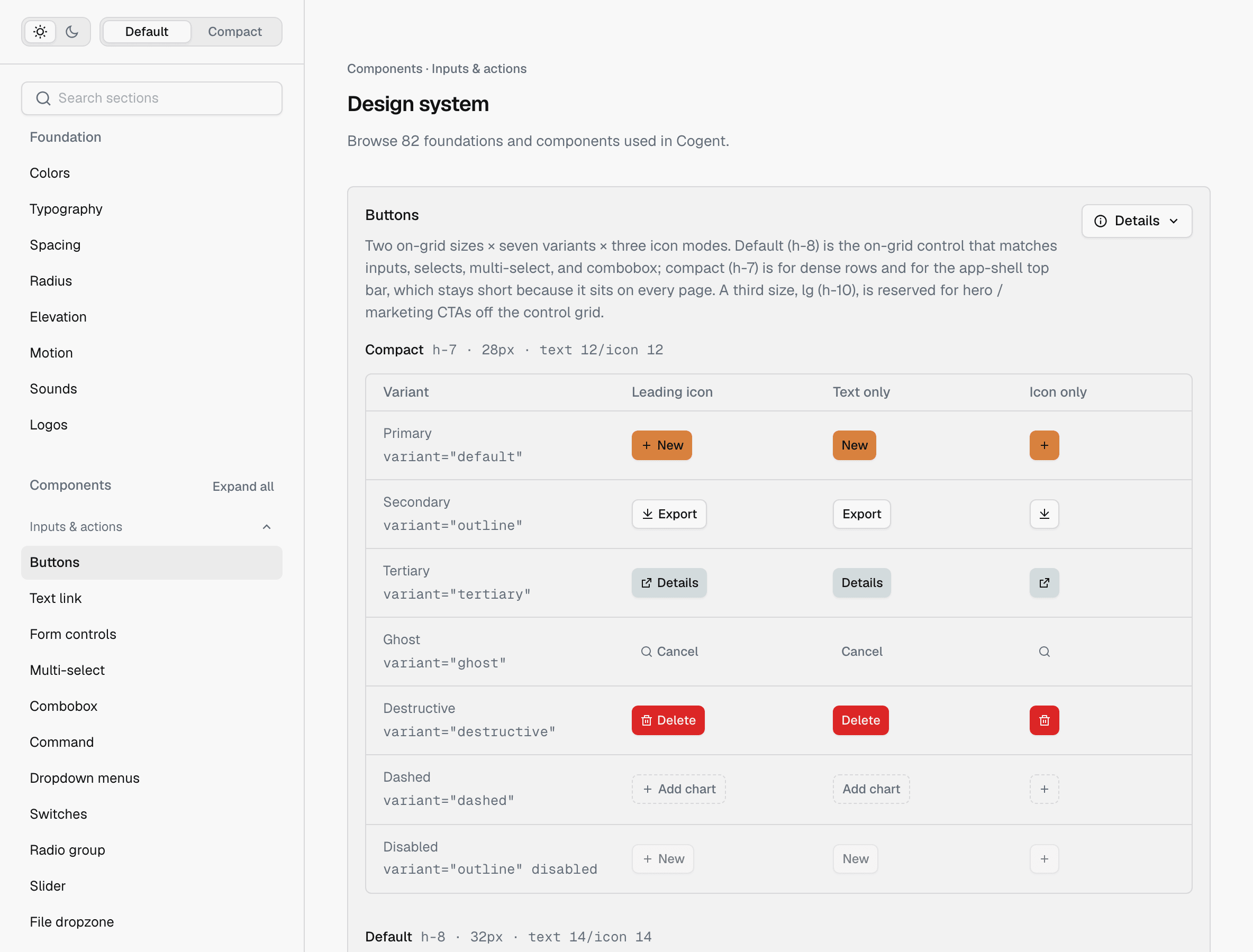
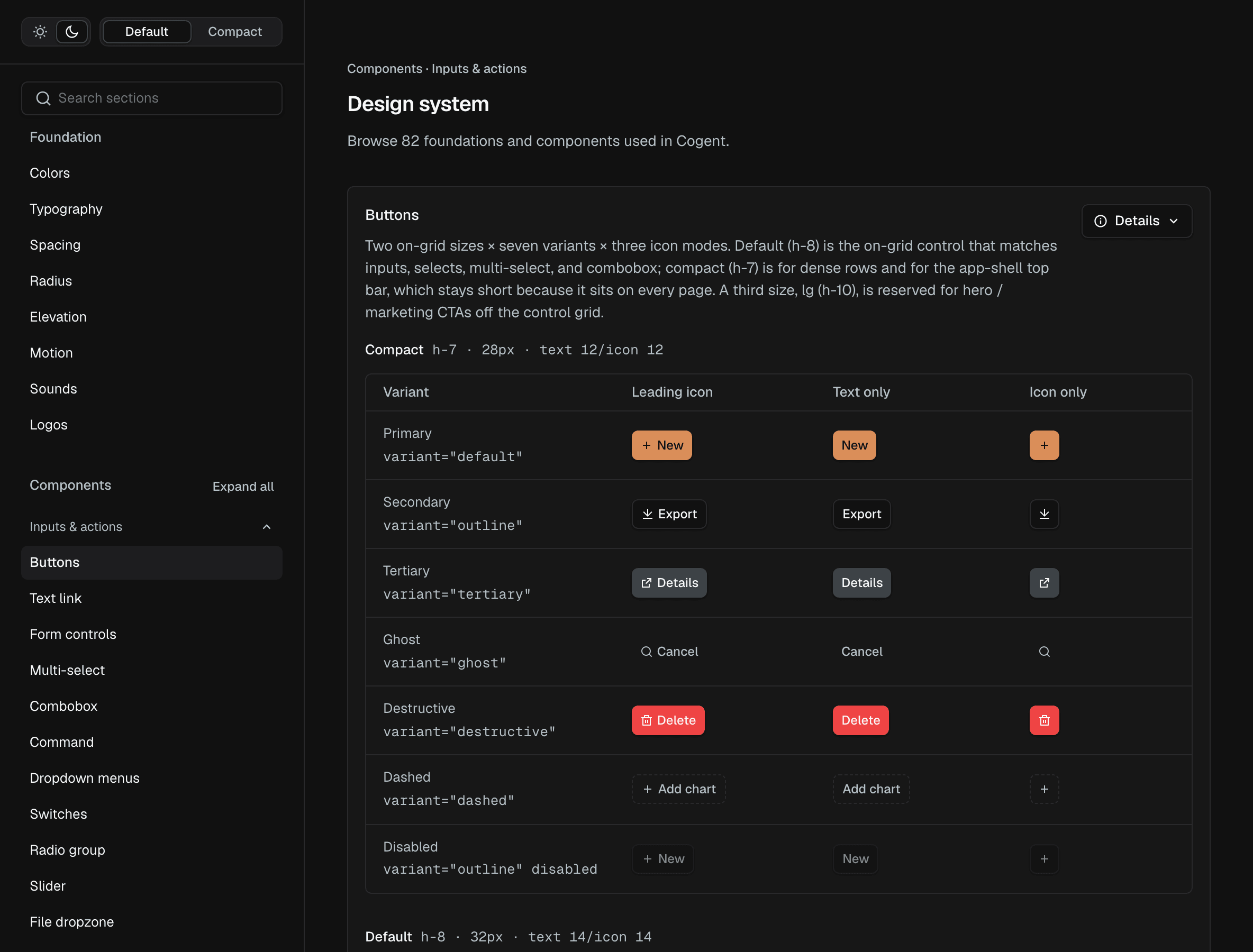
A whole team of engineers ships the product, so I built an internal Storybook: every foundation and component, live in light and dark and at both densities, with when to use it and what not to copy. It’s where I QA the system, and where engineers and their coding agents look before they build.
09In their words
“Hyun is truly exceptional at his craft. He is deeply passionate about user experience and he creates incredible leverage across the team.”